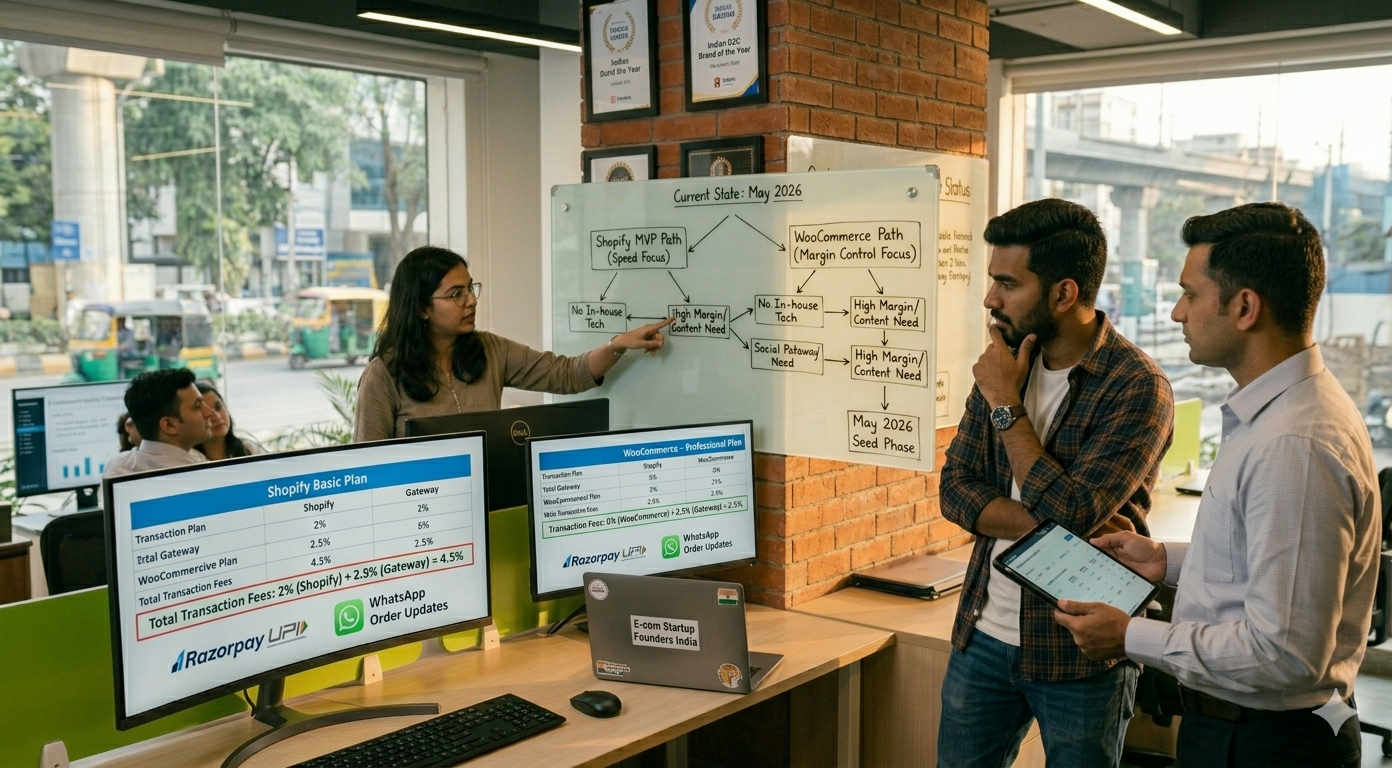

Launching an e-commerce startup in India in 2026-2027 is an exercise in balancing immediate performance with the high cost of customer acquisition. Unlike a standard corporate site, an e-commerce platform is a transactional engine where speed, security, and checkout friction directly impact your revenue. For an early-stage startup, the cost of development varies based on whether you choose a hosted SaaS model, a self-hosted CMS, or a fully custom build.
E-commerce Budget Tiers for 2026-2027
For a serious startup looking to enter the Indian market, here is how the pricing generally breaks down:
- The “SaaS Starter” (₹30,000 – ₹80,000 + Monthly Fees):Using platforms like Shopify is the fastest way to launch. In 2026-2027, the setup cost for a professional theme, basic app integration (for GST invoicing and UPI), and product cataloging falls in this bracket. While the upfront cost is low, remember you will pay monthly subscriptions and transaction fees (typically 0.5% to 2% extra since Shopify Payments is not natively in India).
- The “Self-Hosted Growth” Store (₹60,000 – ₹1,80,000):WooCommerce (WordPress-based) is the favorite for Indian SMEs who want to avoid transaction fees. This tier includes a custom UI/UX, advanced filtering, and native integration with Indian logistics providers like Shiprocket or Delhivery. It is highly flexible but requires technical maintenance to ensure speed doesn’t drop as your catalog grows.
- The “Custom Brand” Experience (₹2,50,000 – ₹10,00,000+):For D2C brands that require a unique shopping experience—such as personalized product builders, complex loyalty programs, or headless commerce (using React/Next.js)—a custom build is necessary. This ensures the fastest possible load times for users in Tier-2 cities on 5G/6G networks and offers full ownership of the source code.
India-Specific Essential Costs
In 2026-2027, building an e-commerce site in India involves specific integrations that are non-negotiable for trust and operations:
- Payment Gateways: Integration is usually free, but you pay 1.9% to 2.5% per transaction to providers like Razorpay or PayU.
- Logistics & Pin Code Check: Real-time shipping calculators and automated NDR (Non-Delivery Report) management are essential for Indian logistics, costing roughly ₹5,000 – ₹15,000 for setup.
- WhatsApp Marketing Integration: Since WhatsApp is the primary communication channel in India, integrating automated order updates and abandoned cart alerts is a must, typically costing ₹3,000 – ₹10,000 annually for API usage.
The Hidden “Ongoing” Budget
A common mistake for Indian founders is spending 100% of the budget on development and 0% on maintenance. For a healthy 2026-2027 store, you must budget for:
- Hosting & CDN: High-traffic Indian stores need specialized cloud hosting to handle spikes during festival sales (like Diwali). Expect to pay ₹1,500 – ₹8,000 per month.
- Maintenance: Security patches and catalog updates generally cost 15% to 20% of your initial build cost per year.
- SEO & Content: An e-commerce site without SEO is a store in a desert. Monthly retainers for SEO-first product descriptions and technical health range from ₹15,000 to ₹45,000.
Final Decision Guide
| Startup Stage | Best Platform | Initial Cost | Monthly Running Cost |
| Testing MVP | Shopify | ₹35k – ₹60k | High (Fees + Apps) |
| Scaling D2C | WooCommerce | ₹80k – ₹1.5L | Low (Hosting only) |
| High Growth | Custom Stack | ₹4L+ | Moderate (Maintenance) |
Conclusion
For most early-stage Indian startups in 2026-2027, a budget of ₹75,000 to ₹1,50,000 is the “safe zone.” This allows for a professionally designed, SEO-ready store that integrates seamlessly with UPI, local shipping, and WhatsApp, giving you a competitive edge in the crowded digital marketplace.